
Materials & comfort
Low-E windows and daylight in an Arizona casita.
Low-E glazing is part of ACB’s standard approach. Choosing the window also means deciding on orientation, size, operation, shade, privacy, and the room it serves.
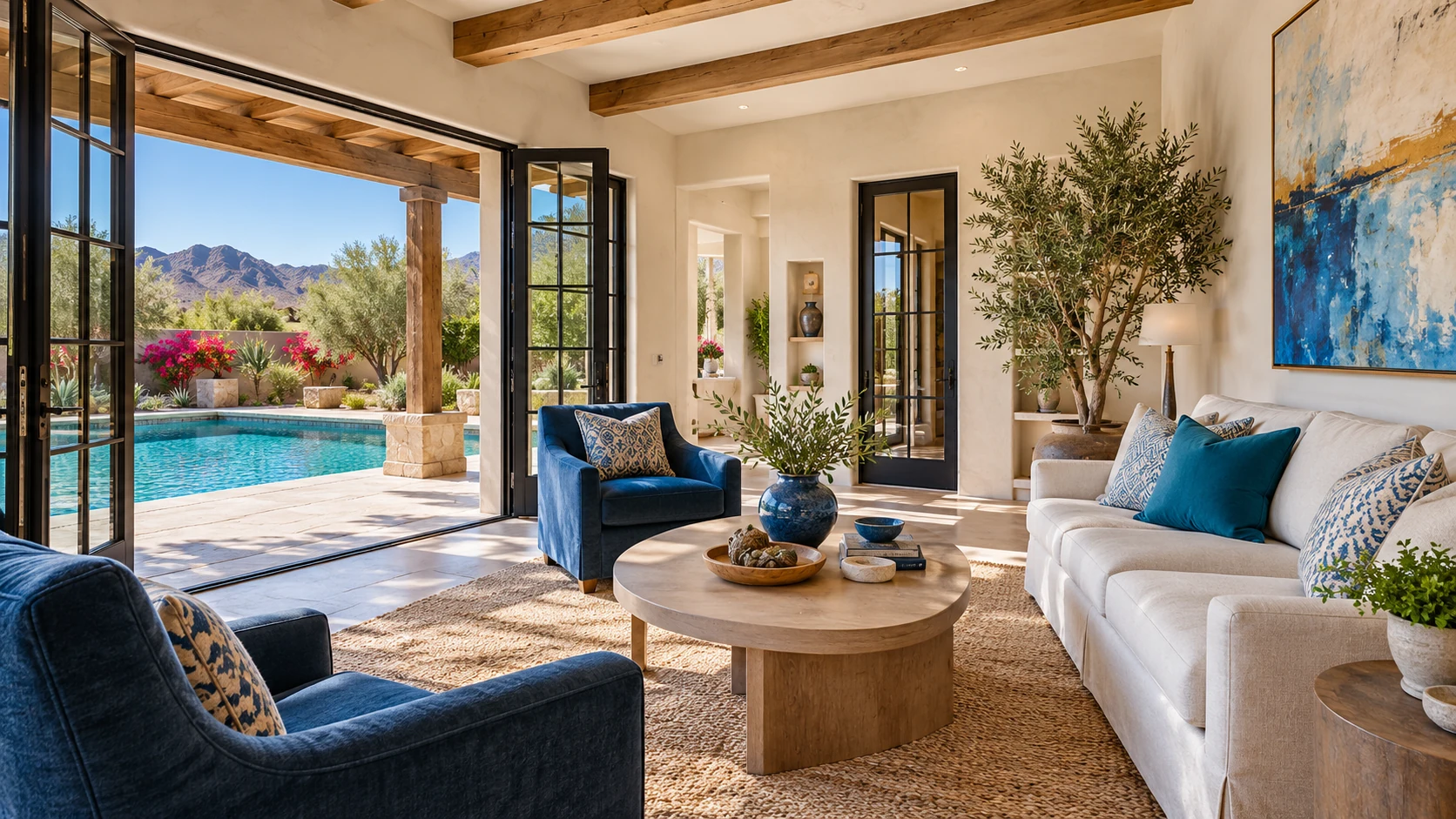
Start with the view and the time of day
Consider what the occupant will see from the bed, a desk, a kitchen work area, or the main seating. Review privacy from neighboring spaces and the way the room will be used at different times. Those decisions help shape the opening before the frame is selected.
Consider outdoor shade with the opening
A patio cover, roof overhang, landscape, and nearby buildings influence the experience of the window. Coordinate the opening with the actual site and architectural design rather than copying a large area of glass from a rendering.
Review the complete window package
Glass performance, frame, size, operation, installation, and applicable safety requirements belong in the specification. Ask which items are part of the base scope and what changes if the design calls for a different size or system.
Place furniture on the drawing
A window may compete with a headboard, desk, television, or storage. Work through the furniture and circulation at the same time as the openings so daylight and views support the way the room will be lived in.
Make upgrades deliberately
Larger or different openings can affect more than the window purchase. Structure, installation, shading, privacy, and finishes may also need coordination. Review the full change in scope before making the selection.