
May 26, 2026 / Property Value / Arizona Casita Builders
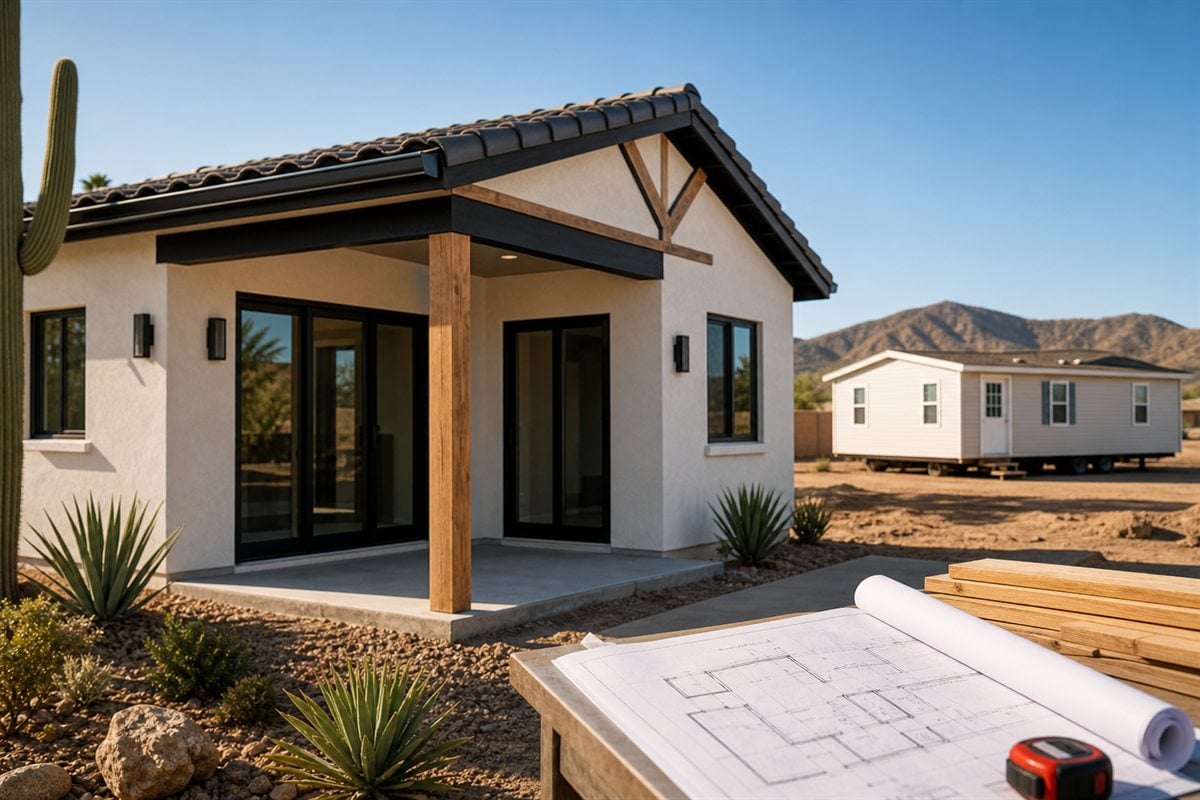
If it has wheels, it usually depreciates. If it is built into your property, it can help build equity.
A Casita Is Not Just Extra Space
When homeowners compare a manufactured home, park model, or wheeled unit against a traditional site-built casita, the first conversation is often price. That makes sense, but price is only the beginning. The more important question is what that structure becomes after it is placed on your property.
A manufactured unit is often viewed as personal property or a temporary improvement. A site-built casita is constructed on a permanent foundation, tied into the property, designed to meet local requirements, and built to look like it belongs with the home. That difference can change how buyers see it, how appraisers discuss it, how long it lasts, and how useful it is over time.
Wheel Estate Versus Real Estate
The phrase is a little playful, but the point is serious: if it has wheels, it is usually a depreciating asset. Cars, trailers, RVs, and many manufactured units tend to lose value as they age because they are treated more like movable products than permanent improvements.
A site-built casita is different. It is built into the property. It can be designed to complement the main home, connected to utilities in a permanent way, finished with durable exterior materials, and permitted as part of a long-term property improvement. In many cases, that gives the homeowner a better story when it is time to refinance, sell, or simply explain the value of the property.
Why Permanent Construction Matters
Permanent construction gives homeowners more than curb appeal. It creates a structure that can be insulated, framed, roofed, wired, conditioned, and finished with the same seriousness as a primary residence. That matters in Arizona, where heat, sun exposure, wind, dust, and monsoon storms punish shortcuts.
A traditional build can be planned around the exact property, the main home, setbacks, access, patios, privacy, drainage, rooflines, exterior colors, and long-term use. Instead of trying to make a factory-built product fit the yard, the casita is designed for the yard from the beginning.
- A permanent foundation helps the casita feel integrated with the property.
- Matching exterior materials can make the ADU look intentional instead of added on.
- Site-built framing allows better control over insulation, windows, roof design, and utility runs.
- A custom layout can support guests, parents, rental use, office space, hobbies, or long-term flexibility.
- Durable construction can reduce the feeling that the unit is temporary or disposable.
The Buyer Perception Problem
Buyers often make emotional decisions before they make financial ones. A finished casita that matches the home can feel like a true guest house, private suite, studio, or backyard residence. A wheeled unit can feel like something that may need to be removed, replaced, financed separately, or explained.
That perception matters. When a potential buyer walks a property, a well-built casita can help them imagine family visits, multigenerational living, privacy, work-from-home space, or additional functional square footage. The structure feels like part of the lifestyle the property offers.
Customization Is A Major Advantage
Manufactured products are limited by factory dimensions, transportation rules, pre-set layouts, and the compromises required to ship a building. Site-built casitas are not boxed in the same way. The plan can respond to the property and the client.
Arizona Casita Builders can design around views, patios, garage access, existing pool layouts, exterior style, guest privacy, aging parents, rental goals, storage needs, and the way the main home already lives. That level of design flexibility is one of the biggest reasons homeowners choose a traditional build.
The Long-Term Value Conversation
No builder should promise a specific appraisal result, because property value depends on the market, the municipality, permitting, quality, comparable sales, and the way the improvement is classified. Still, the logic is straightforward: a durable, permitted, site-built structure that fits the home usually gives the property a stronger long-term value story than a movable unit.
For many homeowners, the decision is not just about today. It is about building something that makes the property more useful, more beautiful, more flexible, and more valuable to the next person who sees it. That is the difference between parking space in the backyard and adding real living space to the property.
A casita should feel like a permanent improvement to your home, not a temporary object parked behind it.